Cart
0
Holster retention isn't a single number—it's a sliding scale between speed and security. Whether you're running an airsoft pistol on the field or carrying a real firearm for personal protection, understanding the standard retention levels helps you pick the right gear for your situation.
Retention levels (1, 2, 3, and beyond) describe how many active or passive mechanisms hold your weapon in place. A lower level means faster draws but less security against snatch attempts; a higher level adds barriers that require deliberate deactivation before the gun can be drawn.
This guide breaks down each level in plain English, with practical examples for airsoft, duty use, and concealed carry. By the end, you'll know exactly what "level 2 holster" means—and whether it's right for you.
What Is Holster Retention? Passive vs. Active Mechanisms

Before diving into levels, you need to understand the two categories of retention:
- Passive retention – Holds the handgun using friction, a tension screw, or the holster's molded shape. The weapon stays in place during normal movement but can be drawn without pressing any button, lever, or strap. The force needed to overcome passive retention is constant and predictable.
- Active retention – Uses a mechanical device (thumb break, hood, strap, button, or locking lever) that must be intentionally disengaged to draw. Active retention is defeatable by the user but much harder for an attacker to overcome quickly.
Most holsters combine both. The "level" number refers to the number of independent, intentional actions required to release the firearm—typically counting the draw stroke as one action. Different manufacturers may interpret "level" loosely, but the industry convention is as follows.
Level 1 Holster – Passive Retention Only
A Level 1 holster relies entirely on passive retention to keep the weapon secure. There is no strap, hood, or button. The primary retention mechanisms are:
- Friction from a tight-fit molded shell (often adjustable with a tension screw)
- A "click" or detent from the trigger guard engaging a bump inside the holster
- In some cases, an adjustable retention screw at the belt line (common in paddle holsters)
How it works in practice: The firearm is pushed into the holster until you hear or feel a click. To draw, you simply pull upward with a smooth motion. There is no strap to undo, no button to press—just a straight draw.
Who uses Level 1 holsters? - Concealed carry users who prioritize speed and quiet draws. Most IWB (inside-the-waistband) holsters are Level 1 because the body's own pressure adds security. - Airsoft players in fast-paced game modes like speedsoft, where milliseconds matter. A Level 1 drop‑leg or belt holster allows rapid reholstering after reloads. - Competition shooters (USPSA, IPSC) who need the fastest possible split times.
Trade-offs: Low snatch resistance. An opponent could grab your pistol and draw it with the same motion you use. Level 1 is generally not recommended for uniformed duty or open-carry scenarios where someone might attempt a weapon grab.
Level 2 Holster – One Active Retention Device
A Level 2 holster adds one active retention device to the passive fit. The user must deliberately disengage that device during the draw stroke.
Common Level 2 designs:
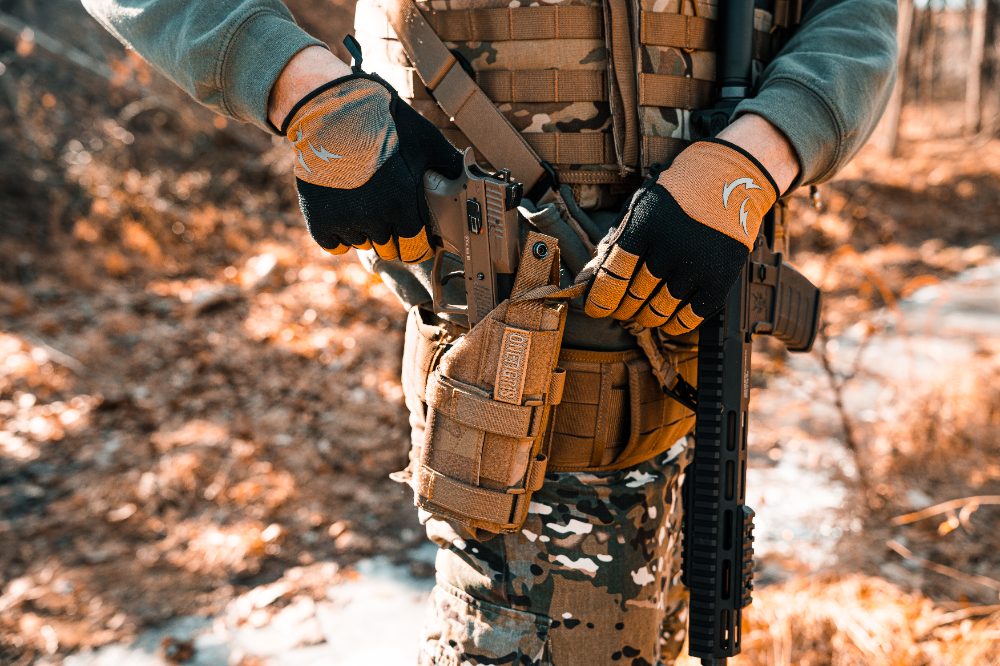
- Thumb break (aka "thumb snap" or "security strap") – A strap that passes over the back of the slide or between the slide and optic. You press the release tab with your thumb as you grip the weapon. Many thumb breaks also include a friction snap (like a seatbelt buckle) for audible feedback.
- Hood or "lever" – A plastic or Kydex hood that covers the rear of the slide. You push the hood down with your thumb or palm to release the firearm. Popular in duty holsters (e.g., Safariland SLS).
- Release button or paddle – A button mounted on the body or belt loop that must be pressed to release a locking mechanism inside the holster. Often used in drop‑leg rigs.
How it works in practice (thumb break example): 1. Grip the handgun in the holster. 2. Simultaneously press the thumb break release with your thumb. 3. Draw straight upward. The strap flips open as you draw.
Who uses Level 2 holsters? - Law enforcement and security who open-carry and need moderate snatch resistance without sacrificing draw speed for immediate threat response. - Airsoft milsim players who want realism and practice with duty-style gear. Many airsoft holsters mimic the Level 2 Safariland clone system. - Outdoor enthusiasts hiking, hunting, or camping, where the weapon might be bumped against rocks or tree branches. The extra retention prevents accidental dislodging.
Trade-offs: Slightly slower draw than Level 1 because you must activate the device. Some designs (like the SLS hood) can be defeated with a "rip" if an attacker knows the technique, but they buy critical extra time.
Level 3 Holster – Two Active Retention Devices
A Level 3 holster adds a second independent active retention device, typically on top of the passive fit and the first active device. The user must disengage both in sequence during the draw.
Most common Level 3 configuration:
- Thumb break + hood (or lever + strap). For example, the Safariland 6360 ALS/SLS:
- ALS: Automatic Locking System (a passive retention lock that engages when the pistol is seated, released with a thumb button on the side).
- SLS: Self-Locking System (a rotating hood that covers the rear sight).
To draw from a Level 3 holster: 1. Grip the pistol. 2. Press the ALS thumb button with your index finger or thumb. 3. Rotate the SLS hood forward with your thumb. 4. Draw the weapon.
Who uses Level 3 holsters? - Uniformed police and military who must prevent gun grabs in crowded environments. Many agencies mandate Level 3 for patrol officers. - Airsoft event organizers who require extra safety measures for rental or loaner gear. The double retention minimizes accidental drops. - Users carrying in high-risk settings (armored truck guards, plainclothes detail with overt holsters).
Trade-offs: Noticeably slower draw. The complex motion requires training to execute under stress. Reholstering can also be slower because you must align the hood. Level 3 holsters are bulkier and less comfortable for concealed carry.
Level 4 and Beyond – Rare and Specialized
You may see "Level 4" or "Level 5" holsters advertised, but these are not standardized. They typically add a third active device (such as a secondary lock for the light or a shroud over the ejection port) or a mechanical trigger lock.
For the vast majority of tactical and airsoft users, Level 1 to Level 3 covers every practical need. Higher levels are used only where extreme snatch resistance is required (e.g., prison transport, counter‑terrorist units). They are not suitable for concealed carry or fast‑paced airsoft games.
Choosing the Right Retention Level for Your Use Case
| Use Case | Recommended Level | Why |
|---|---|---|
| Concealed carry (IWB) | Level 1 | Body contact adds retention; speed is critical for self‑defense. |
| Open‑carry duty / security | Level 2 or 3 | Trade some speed for snatch protection. Agency policy often dictates the level. |
| Airsoft skirmish / speedball | Level 1 | Fast reholstering between rounds. Heavier retention slows you down. |
| Airsoft milsim / realistic training | Level 2 (or 3 for realism) | Practice manipulating retention devices like real gear. Also prevents weapon loss during sprints. |
| Hiking / camping / outdoor EDC | Level 2 | Passive retention may not hold during falls or bushwhacking. A thumb break adds peace of mind. |
Important note for airsoft players: Most airsoft pistols have less predictable trigger guard dimensions than real firearms. Some Level 2/3 holsters designed for real steel may not lock onto an airsoft gun properly unless the holster is airsoft‑specific or has adjustable inserts. OneTigris holsters are built with airsoft compatibility in mind—more on that below.
How OneTigris Holsters Balance Security and Speed

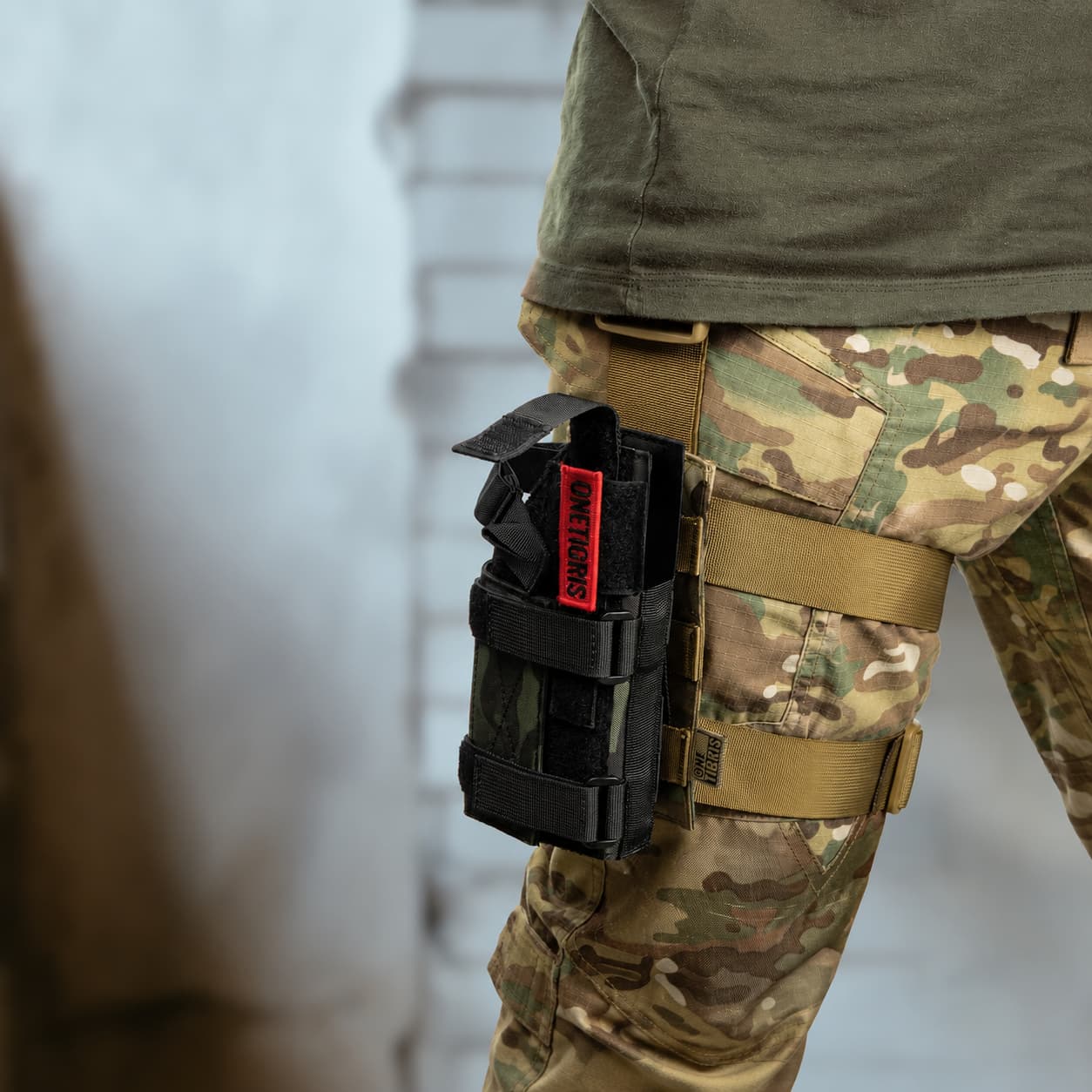
OneTigris tactical holsters are designed for the real‑world conditions airsoft and outdoor enthusiasts face: dirt, moisture, quick transitions between weapons, and the need for reliable retention without slowing you down.
While specific retention levels vary by model, most OneTigris holsters offer:
- Adjustable passive retention – A tension screw lets you fine‑tune the friction so your pistol is held snugly but still draws cleanly. This gives you the option of Level 1 by backing off the screw, or tighter security for running and climbing.
- Active retention options – Several models integrate a thumb break or adjustable strap that acts as a Level 2 device. These are common in their drop‑leg and belt holster lines.
- MOLLE‑compatible mounting – All OneTigris holsters attach to standard MOLLE‑webbing vests, belts, or chest rigs, giving you flexibility to change carry position without changing holsters.
The key insight: retention isn't "set and forget." You can adjust a OneTigris holster to match your activity. For a fast‑paced airsoft match, leave the tension light and disengage any strap. For a weekend hike where you're bending and climbing, tighten the screw and add the active strap for Level 2 confidence.
Explore the full OneTigris holster collection to find models with adjustable passive retention and optional active devices. Each holster is built for real‑world use—whether you're on the airsoft field, at the range, or in the backcountry.
Frequently Asked Questions
1. What is the difference between Level 1, 2, and 3 holster retention? Level 1 uses only passive retention (friction/tension). Level 2 adds one active retention device (thumb break, hood, or button) that must be disengaged. Level 3 adds a second independent active device. The higher the level, the more steps required to draw—and the more secure the holster against snatch attempts.
2. Is a Level 2 holster better for airsoft than Level 1? It depends on your play style. For speed‑focused games (speedsoft, CQB), Level 1 is faster. For milsim or outdoor scenarios where you're running through brush or might bump your holster, Level 2 prevents accidental weapon loss. Many OneTigris holsters let you switch between both by adjusting a strap.
3. Can I use a Level 3 holster for concealed carry? Technically yes, but it's not common. Level 3 holsters are bulkier, require more training to draw under stress, and are usually designed for duty belts. For concealed carry, Level 1 or 2 is more practical.
4. Do OneTigris holsters work with real firearms or just airsoft? OneTigris holsters are built primarily for airsoft and range use, but many models fit real‑steel handguns of the same size and profile. Always check the specific product description for compatibility, and never assume an airsoft holster provides the same retention or safety as a purpose‑built firearm holster.
5. What does "passive retention" mean in a holster? Passive retention means the holster holds the weapon using friction, tension, or a molded fit—without any mechanical latch or strap you must release. You can draw simply by pulling up. Examples include a Kydex holster with a tension screw or a leather holster that molds around the trigger guard. See also: Holster – Wikipedia.
6. How do I adjust the retention on a OneTigris holster? Most OneTigris models have a tension screw near the trigger guard area. Turn it clockwise to increase friction (tighter retention), counter‑clockwise to loosen. Some also include a removable thumb break strap—you can remove it entirely for Level 1 operation or attach it for Level 2.
7. Is "Level 4" holster retention a real thing? There is no industry standard for Level 4. Some manufacturers use "Level 4" to describe a holster with three active devices or a secondary lock. For practical purposes, Level 3 is the maximum you'll encounter in tactical and duty use. Higher levels are niche products for extreme security requirements.